Summary#
I am a Senior Software Developer and Backend Expert with over seven years of experience engineering the high-performance distributed systems required to scale compute-intensive services and modern AI applications. While my core expertise is rooted in robust backend architecture and applied AI development, I maintain strong cross-stack frontend capabilities, enabling me to seamlessly bridge complex intelligent logic layers with polished, user-facing interfaces.
My engineering philosophy is anchored in structural integrity, predictable scalability, and clean abstractions. I specialize in identifying and resolving systemic bottlenecks—such as decoupling monolithic data schemas to eradicate O(N) limitations—and establishing the asynchronous infrastructure necessary to power intelligent products without compromising enterprise stability.
Currently, my work focuses on the intersection of advanced backend infrastructure and the intelligent logic layer. I specialize in architecting autonomous AI agents, complex Retrieval-Augmented Generation (RAG) pipelines, and integrating Model Context Protocols (MCP) to build highly responsive, high-throughput applications.
Career Highlights:
- AI Application & Agent Development: Extensive experience engineering fault-tolerant backend pipelines for AI integration. Independent R&D includes building autonomous discovery agents (such as “Hackathon Sniper,” utilizing Groq LLMs and Brave Search for the Notion MCP Hackathon) and engineering robust, RAG-driven inference pipelines utilizing LangChain.
- Patentable R&D: Dual US Patent Holder (US-20250363378-A1, US-20250240262-A1). Architected a zone-based, production-grade algorithm to optimize spatial computing—successfully reducing distributed network message volume by up to 80%—and developed a separate conceptual Machine Learning (Reinforcement Learning) framework.
- Enterprise Scale & Delivery: Served as a Senior Engineer for the HTC Viverse global launch, where I conceptualized and designed the dynamic edge-routing network architecture (AWS Lambda@Edge) required to scale to one million monthly active users.
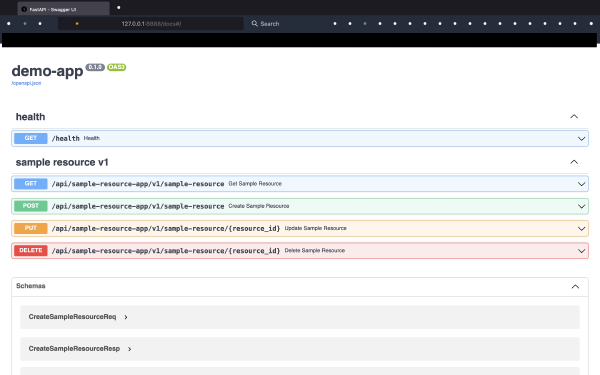
- Systemic Evolution: Designed, engineered from scratch, and open-sourced a complete asynchronous microservice architecture (FastAPI/Python). Established zero-trust data pipelines alongside this architecture to securely integrate programmatic services and aggressively drive enterprise technical execution.
Experience#
Senior Software Engineer · HTC Viverse Research Team
May 2022 – Jul 2025
Go · Elixir · Python · Node.js · PostgreSQL · Docker · AWS · WebRTC · mediasoup
High-concurrency Metaverse platform supporting massive concurrent requests.
- Viverse Worlds Global Launch Scale: Architected the foundational backend and serverless edge-routing infrastructure (AWS Lambda@Edge) driving the platform’s global commercial release to support 1 million monthly active users.
- Technical Leadership: Directed multi-disciplinary engineering pods from system design to execution, transitioning the core platform from an isolated, single-scene architecture into an interconnected multiple-scene 3D ecosystem while maintaining strict backward compatibility.
- Database Concurrency: Eradicated a critical
O(N)locking bottleneck during high-concurrency room allocations by redesigning the PostgreSQL schema. Replaced highly contested table-level locks with granularO(1)row-level locking, accelerating throughput by 10x-100x and stabilizing p99 latencies to 2ms-10ms. - Real-Time AI Pipelines: Engineered an event-driven media bridge (mediasoup) connecting low-latency WebRTC/RTP streams to persistent cloud storage. Designed secure, asynchronous data pipelines for third-party AI moderation, directly driving a $33,000 USD revenue increase.
- Dual Patent Inventor (US-20250240262-A1, US-20250363378-A1): Invented and engineered an zone-based distributed spatial computing algorithm (combining frustum culling, dead reckoning) and a Machine Learning (Reinforcement Learning) evaluating occlusion framework, slashing distributed network egress bandwidth by up to 80%.
- Compute Scalability: Spearheaded a multi-worker paradigm shift in the WebRTC core, breaking single-core CPU ceilings to expand concurrent capacity from 300 to 4,500+ streams per event.
- Load Simulation & Reliability: Engineered a custom WebRTC load-testing CLI tool to simulate massive concurrent traffic, proactively isolating memory leaks and optimizing hardware load-balancing prior to production.
Senior Backend Engineer · HTC Vive
Sep 2020 – May 2022
Python (FastAPI) · Golang · MongoDB · MySQL · Docker · EKS · AWS · React
Centralized enterprise VR platform (Vive Business Training) supporting high-density concurrent sessions for hundreds of institutional clients, alongside an ecosystem managing complex 3D asset generation.
- Architecture & Standardization: Drove a high-performance evolution by architecting an asynchronous FastAPI standard that slashed API latency by 85%. Enforced strict engineering rigor, achieving 95% test coverage and establishing containerized auto-scaling pipelines via Docker and AWS EKS to maintain 99.99% uptime across critical multi-platform services.
- Asynchronous Compute Pipelines: Architected a fault-tolerant microservice ecosystem leveraging Celery and AWS SQS to decouple heavy 3D model and media processing, guaranteeing high availability and non-blocking API execution.
- Concurrency & State Management: Engineered core backend services driving the asset lifecycle. Designed strict transactional logic to completely eradicate database race conditions during high-concurrency, multi-tenant modifications.
- Polyglot Persistence & Identity: Engineered a highly scalable RBAC ecosystem and integrated multi-platform account management APIs with third-party cloud hosting to streamline SaaS provisioning. Enforced polyglot persistence, isolating rigid relational data in MySQL while utilizing MongoDB for flexible 3D asset schemas.
- Serverless Observability Architecture: Engineered an event-driven health-monitoring pipeline utilizing AWS Lambda (Golang/Python) and CloudWatch to continuously validate the identity system’s availability, enabling real-time fault detection and ensuring high availability
- Zero-Trust IoT Edge Routing: Architected a Proof of Concept utilizing AWS IoT (MQTT) to manage telemetry for large fleets of VR headsets, incorporating a Certificate Vending Machine for X.509 device authentication.
Senior Software Engineer & Technical Lead · InfoBoom Ltd
Feb 2020 – Sep 2020
C++ · Node.js · MongoDB · RabbitMQ · WebRTC · GCP
High-security, end-to-end encrypted SaaS communication platform developed in partnership with Taiwan’s Academia Sinica. Selected for presentation to the President of Taiwan at CYBERSEC 2020.
- Asynchronous System Modernization: Architected the enterprise teardown of a legacy WebRTC monolith, migrating the core infrastructure into a fault-tolerant, event-driven Node.js microservice ecosystem. Leveraged MongoDB and RabbitMQ to establish resilient, asynchronous inter-service communication pipelines.
- Cryptographic Architecture & Compliance: Spearheaded the mission-critical modernization of the 3rd-generation core C++ encryption library. Enforced strict zero-regression API contracts across the entire backend, mobile, and client ecosystem while achieving full ISO27001 and Taiwan MAS compliance.
- Technical Pod Leadership: Directed a 4-person engineering team through complex architectural migrations, managing critical-path to guarantee the on-time delivery of mission-critical security milestones.
- Infrastructure Automation (CI/CD): Introduced and engineered fully automated CI/CD deployment pipelines for the business-critical, multi-platform cryptography library, accelerating developer velocity and resulting in a 3x reduction in average deployment times.
Product Developer · Synology
Dec 2016 – Jun 2018
C++ · Python · Redis · ExtJS · CI/CD
- Architected and delivered full-stack mail flow control features, including SMTP Relay, integrating low-level C++/Postfix/Dovecot components with Redis schemas, web APIs, and ExtJS front-end interfaces.
- Maintained complete ownership of the standalone NAS Mail Server product, ensuring long-term stability, patch management, and feature alignment with enterprise requirements.
- Delivered GDPR compliance features by implementing privacy-preserving data handling mechanisms and system-level audit controls in mail workflows.
- Built and maintained CI/CD pipelines for automated testing and deployment, improving release reliability and team velocity; enhanced system security and uptime by patching critical CVE vulnerabilities (e.g., Dovecot, memcached) and resolving race conditions and memory leaks.
- Drove high reliability and operational excellence through close collaboration with Technical Support, directly resolving escalated customer incidents — including backend data correction, permission fixes, and mail queue management — reducing mean time to resolution (MTTR) for critical issues.
- Collaborated cross-functionally with Product Management, UX/UI designers, QA engineers, and Technical Writers to ensure functional correctness, usability, and documentation accuracy across all user-facing and system features.
Research Assistant · National Taiwan University
May 2014 – Aug 2014
Wireless Networking & Embedded Systems Lab
Project: Information Delivery Middleware for Disaster Management over Heterogeneous Interwoven Communication Networks | Funded by National Science and Technology Council
- Distributed Systems Infrastructure: Built and deployed the foundational distributed testing platform required to execute large-scale, heterogeneous network simulations for the lab’s disaster management research.
- Algorithm Validation Environment: Operationalized the testing environment to conduct empirical validation of experimental service recovery algorithms, simulating network infrastructure failures and ensuring reliable telemetry collection across a publish/subscribe architecture.
- Linux Environment Provisioning: Configured and tuned the underlying Linux operating system and network environments to support high-concurrency distributed testing without I/O degradation.
Skills#
- Languages: Python, C++, Golang, Node.js, Elixir, SQL, JavaScript, TypeScript
- System Architecture: Distributed Systems, Event-Driven Architecture, Microservices, Domain-Driven Design (DDD), Backend-For-Frontend (BFF), Zero-Trust Data Pipelines
- Database & State Management: MySQL, SQLite, PostgreSQL, MongoDB, Redis, Firestore
- Frameworks: FastAPI, LangChain, Gin, Node.js, Flask, React, TensorFlow, PyTorch
- Platforms, Tools & Network Protocols: Git, Docker, Kubernetes, AWS, GCP, Linux, Jenkins, CI/CD, WebRTC, gRPC, RESTful APIs, WebSockets, Terraform (IaC)
Education#
Master of Science in Computer Science#
National Taiwan University 2014 – 2016
- Thesis: Time-Sensitive Message Delivering with QoS in Named Data Networking
- Project: Information Delivery Middleware for Disaster Management over Heterogeneous Interwoven Communication Networks | Funded by National Science and Technology Council
- Project: Real-Time High-Performance Miniature Sensing Systems for Sleep Apnea | Funded by National Science and Technology Council
Bachelor of Science in Computer Science - Program of Computer and Electrical Engineering#
National Chiao Tung University 2009 – 2013
Publications#
Data-driven IoT applications design for smart city and smart buildings#
2017 IEEE SmartWorld, Ubiquitous Intelligence & Computing, Advanced & Trusted Computed, Scalable Computing & Communications, Cloud & Big Data Computing, Internet of People and Smart City Innovation (SmartWorld/SCALCOM/UIC/ATC/CBDCom/IOP/SCI)
Authors: Chi-Sheng Shih; Kuo-Hsiu (Kourtney) Lee; Jyun-Jhe Chou; Kwei-Jay Lin · DOI: 10.1109/UIC-ATC.2017.8397394
Patents#
METHOD AND SYSTEM FOR MANAGING POSITION INFORMATION, AND COMPUTER READABLE STORAGE MEDIUM#
Patent No.: US-20250363378-A1
Inventors: Kuo-Hsiu, Lee· Filed: 2024-05-22
Reduced message exchange volume in distributed spatial computing using Machine Learning (Reinforcement Learning). Patent applications have also been filed in the following regions: European Patent(EP24206749.4 2024-10-15), China(202411517088.4 2024-10-29), Taiwan(113133801 2024-09-06)
METHOD FOR MANAGING MESSAGE TRANSMISSION, CONTROL DEVICE, AND COMPUTER READABLE STORAGE MEDIUM#
Patent No.: US-20250240262-A1
Inventors: Kuo-Hsiu, Lee · Filed: 2024-06-27
Achieved message reduction in distributed spatial computing through innovative algorithms. Real-world application tests showed a 80% reduction in network message volume. Patent applications have also been filed in the following regions: China(202411455975.3 2024-10-18), Taiwan(113131471 2024-08-21)
Projects#

PantryLens | Edge-Routed AI Vision PWA ↗ ↖
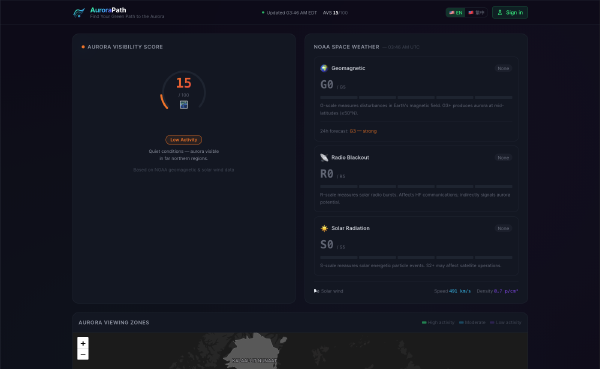
AuroraPath | Secure AI Routing Web Application ↗ ↖
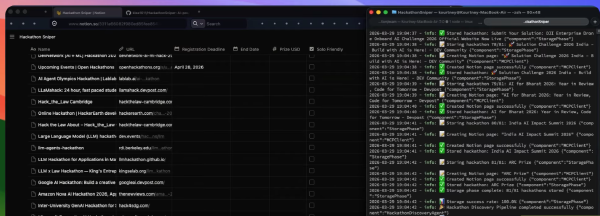
Hackathon Sniper | Autonomous Discovery AI Agent ↗ ↖
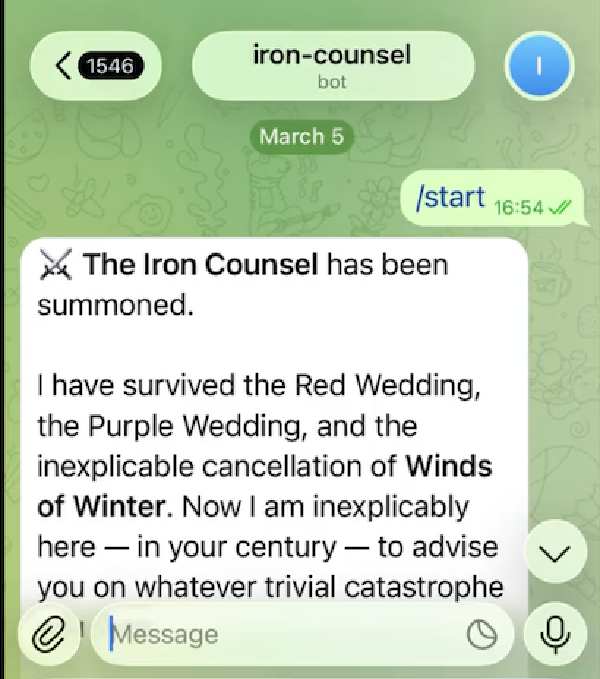
Iron Counsel: Enterprise RAG Architecture & Conversational AI ↗ ↖